
The William and Flora Hewlett Foundation

   5/14/2008
Advanced search


A Commitment to Serving Disadvantaged Communities in the Bay Area and Central Valley


William and Flora Hewlett had a deep, lifelong commitment to strengthening the community in which they lived. Working with the Foundation’s core grantmaking programs, the Foundation provides operating support to promising non-profit organizations that offer a variety of services to disadvantaged communities in the Bay Area and Central Valley.


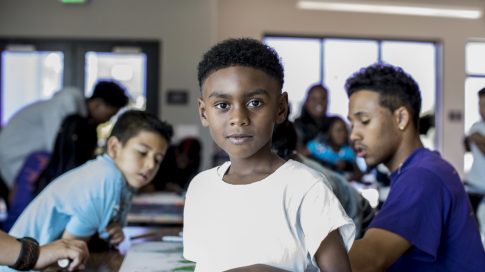
Serving at-risk youth is a priority of this grant making. In disadvantaged neighborhoods in East Palo Alto, Richmond, and San Jose, high-school drop out rates hover between 60 and 70 percent. Many youth leave school to take low-paying jobs that will not lead them out of poverty. A foster youth is more likely to end up in jail or become homeless than graduate from high school. To address these problems, the Program supports organizations that improve the quality of education in the Bay Area.

Barriers to good jobs relegate many Bay Area workers to poverty. A combination of factors, including a lack of basic job skills, limited English proficiency, substance abuse, homelessness, and disabilities, contribute to low wages. The high cost of living in the region adds to the problem.

In addition to its efforts in the areas of education and employment, the Foundation is also taking on the problem of teen pregnancy, which is endemic in low-income communities throughout the Bay Area and Central Valley. Through the Population Program, the Foundation makes grants to expand reproductive health and outreach services to sexually active, low-income teens, and to evaluate the effectiveness of these efforts.

 In order to capture the issue area and geographic expertise of our peers, the Foundation finds opportunities through Hewlett programs and other foundations or intermediary grantmakers.  While our partners provide geographic or issue expertise, the Program emphasizes thoughtful strategy and evaluation, supplementing core organizational or programmatic funding with support for the development of these capabilities.

Typically, collaboration with Hewlett programs complements existing program strategies by introducing or enhancing a component focused on direct service.  For example, drawing upon the expertise of the Foundation's Population Program, the Foundation made a $575,000 grant designed to reduce teen pregnancies and sexually transmitted diseases among at-risk youth in the San Francisco Bay Area.

The grant to Education Training and Research Associates of Scotts Valley will help design and rigorously evaluate a local health clinic program that will provide follow up education and case management to young people who use medical clinic services.

Working with the Education Program, the Foundation is providing ongoing support to Resource Area for Teachers, a San Jose-based organization that helps thousands of teachers who work with low-to-moderate-income schoolchildren. 

 Click here to view how the Population Program is serving Bay Area communities.

Click here to view how the Environment Program is serving Bay Area communities.


Last revised: 1/11/2008

Copyright © 2003-2006 The William and Flora Hewlett Foundation
All rights reserved.